Listening for the leak
Acoustic equipment picks up the sound of water escaping from a pressurised line, which narrows the search under a slab or behind a wall before anything is opened.
A leak under a slab or behind a wall rarely shows itself at the spot where the pipe failed. Lake Travis Plumbing provides leak detection in Spicewood, tracing hidden leaks in homes — listening, thermal and camera checks first, then a repair chosen for the pipe, the slab and the house. Call (254) 822-6941, Monday to Friday, 9 AM to 5 PM.
Most Spicewood homes are built on a slab over thin clay soil and limestone. The soil swells when it is wet and shrinks when it is dry, and that movement stresses the pipes under the slab. Copper develops pinhole leaks, often helped along by hard water, and the water can travel a long way before it shows up as a damp patch, a warm floor, or a bill that jumps for no clear reason.
The signs are usually small at first: a meter that turns with every tap off, the sound of running water when nothing is on, a warm spot on the floor, or a damp patch that never dries. Do not cut concrete or drywall to look for a leak yourself — the opening is almost never in the right place. Our post on shutting off your water main covers the first step if water is already showing.
Detection and repair are one job, not two. The point of finding the leak properly is that the repair is smaller, and the fix lasts.
Acoustic equipment picks up the sound of water escaping from a pressurised line, which narrows the search under a slab or behind a wall before anything is opened.
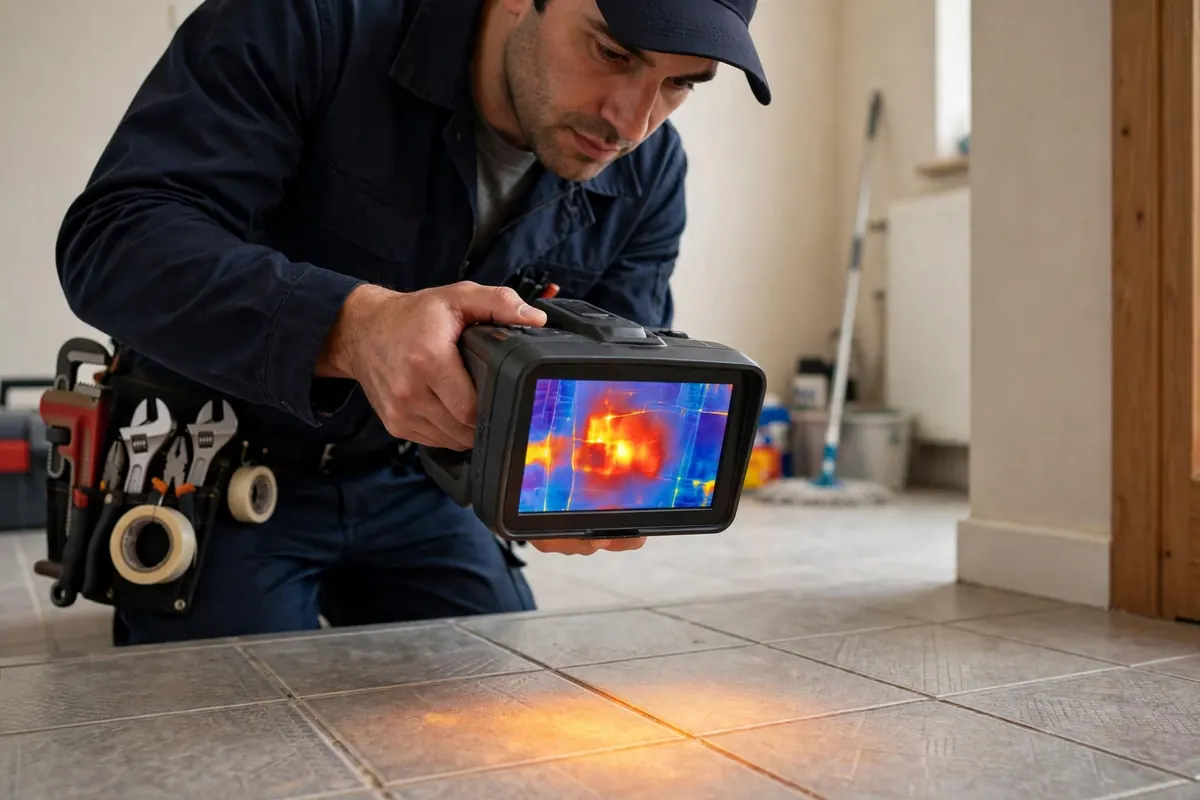
A thermal camera shows warm patches on a floor, which points to a hot-water line leak. It is a guide to where to look, not a promise of an exact spot.
Where a drain or sewer line is suspected, a camera shows the inside of the pipe so a break, a belly or root intrusion is seen rather than guessed at.
Where the failed section can be reached through a small opening, it is cut out and replaced, then pressure-tested. This suits a single, accessible failure.
Where the line under the slab has failed more than once, or access would mean breaking up a large area, running a new line around the slab is often the better repair. Whole-home re-piping is covered on our repiping page.
Call (254) 822-6941, Monday to Friday, 9 AM to 5 PM. Tell us what you have noticed — a warm floor, a running meter, a bill jump, the sound of water with the taps off — and where in the house it shows.
We check the meter with everything off, then walk the house looking for warm spots, damp patches and the layout of the lines. That narrows the search before any equipment comes out.
Listening and thermal checks are used to pinpoint the line. The aim is to open the smallest area the repair needs, not to go looking with a saw.
Direct access, reroute or re-pipe — we explain which fits your pipe, your slab and how many times the line has failed, before any work starts.
The repair is pressure-tested and the meter checked again with the taps off. If the meter has stopped, the leak is stopped.
Call (254) 822-6941, Monday to Friday, 9 AM to 5 PM. Tell us what you have noticed — a warm floor, a running meter, a bill jump, the sound of water with the taps off — and where in the house it shows.
Hears water escaping from a pressurised line under concrete or behind plaster, so the search starts in the right place.
Shows warm floor patches that point to a hot-water slab leak, and cool patches where cold water is escaping.
Shows the inside of a drain or sewer line when the leak is suspected there rather than in a supply line.
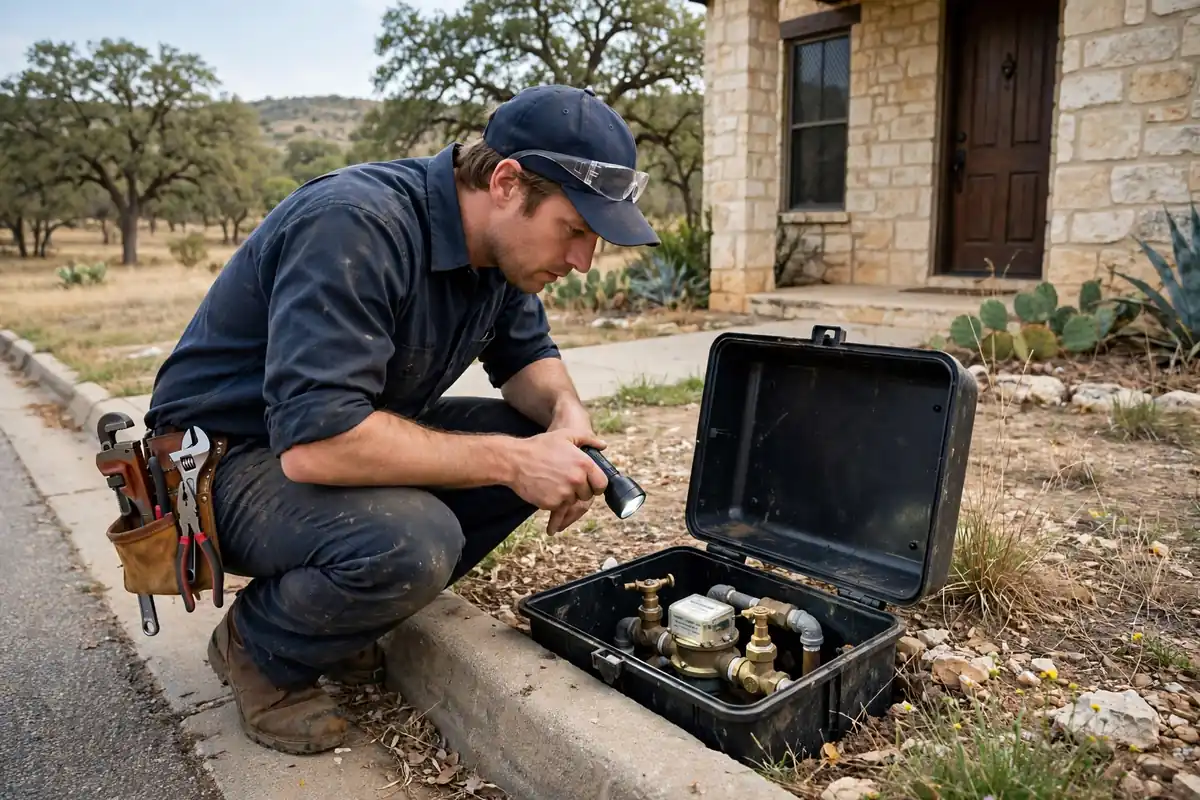
Confirms a repair holds, and confirms a leak has stopped by watching the meter with everything off.
Makes clean copper and PEX connections in tight spaces once the failed section is reached.
Checks whether a damp patch is still wet after a repair, so drying is not guessed at.
These are illustrative examples of the kinds of jobs this service covers, not records of specific completed jobs.
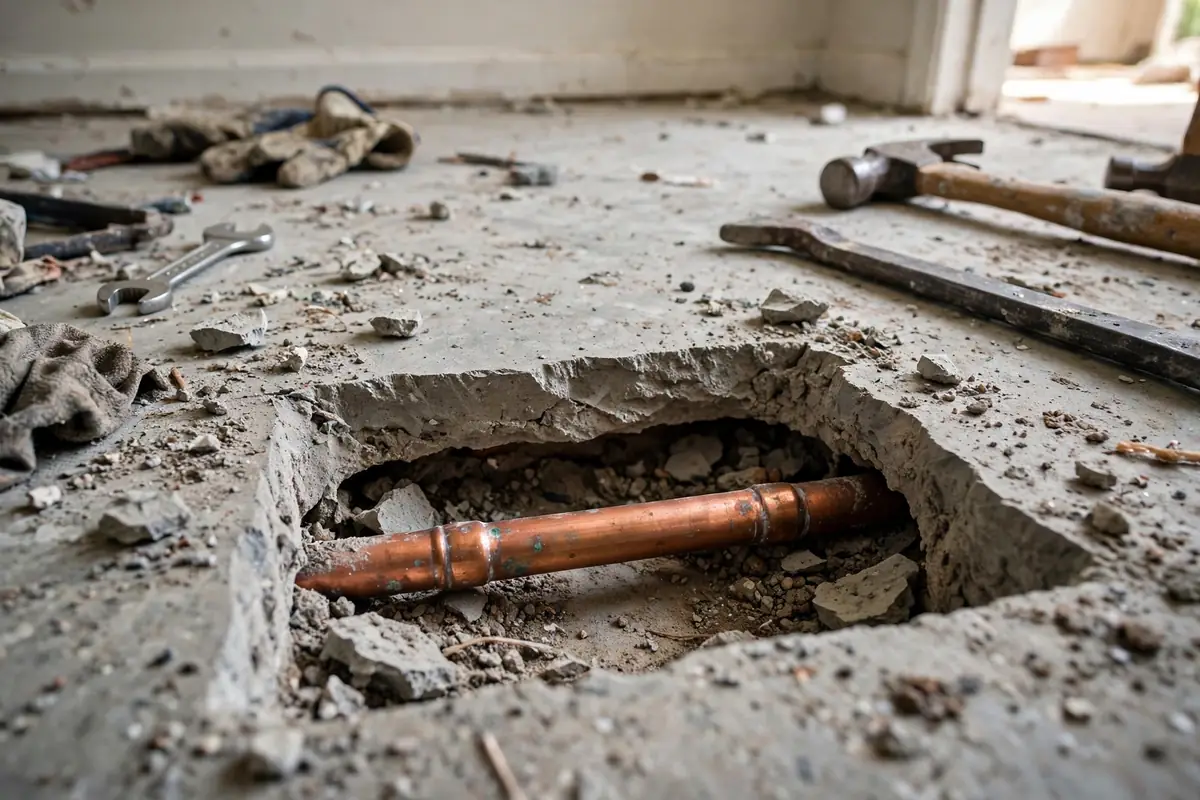
A warm patch on the tile and a meter that never sits still point to a hot-water line under the slab. The floor has felt warm in one spot for weeks.
What typically happens: the leak is located with listening equipment, repaired through a small opening in the slab, and the meter is checked again to confirm it has stopped.
Book this service →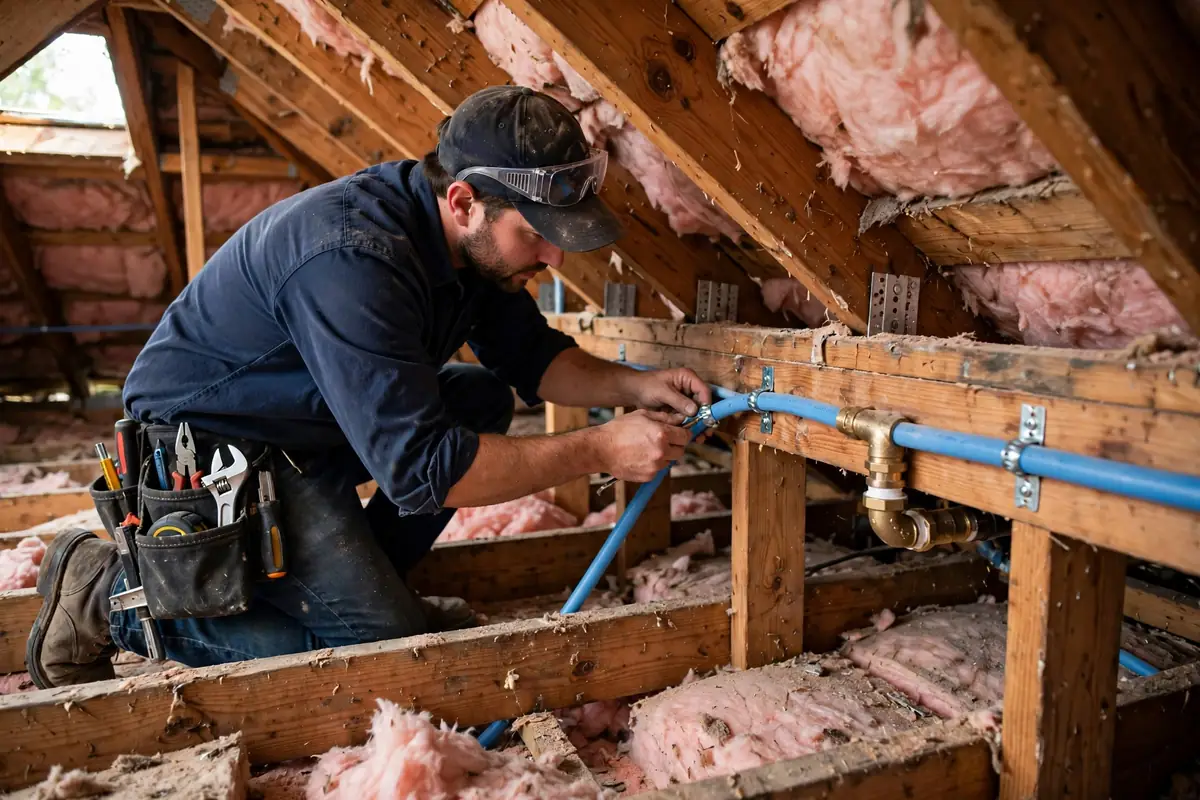
A home with a second slab leak in two years on the same run faces a large patch in the middle of the living room if the slab is broken open again.
What typically happens: a new line is run through the attic and down the wall, bypassing the failed run entirely, and the old line is capped off under the slab.
Book this service →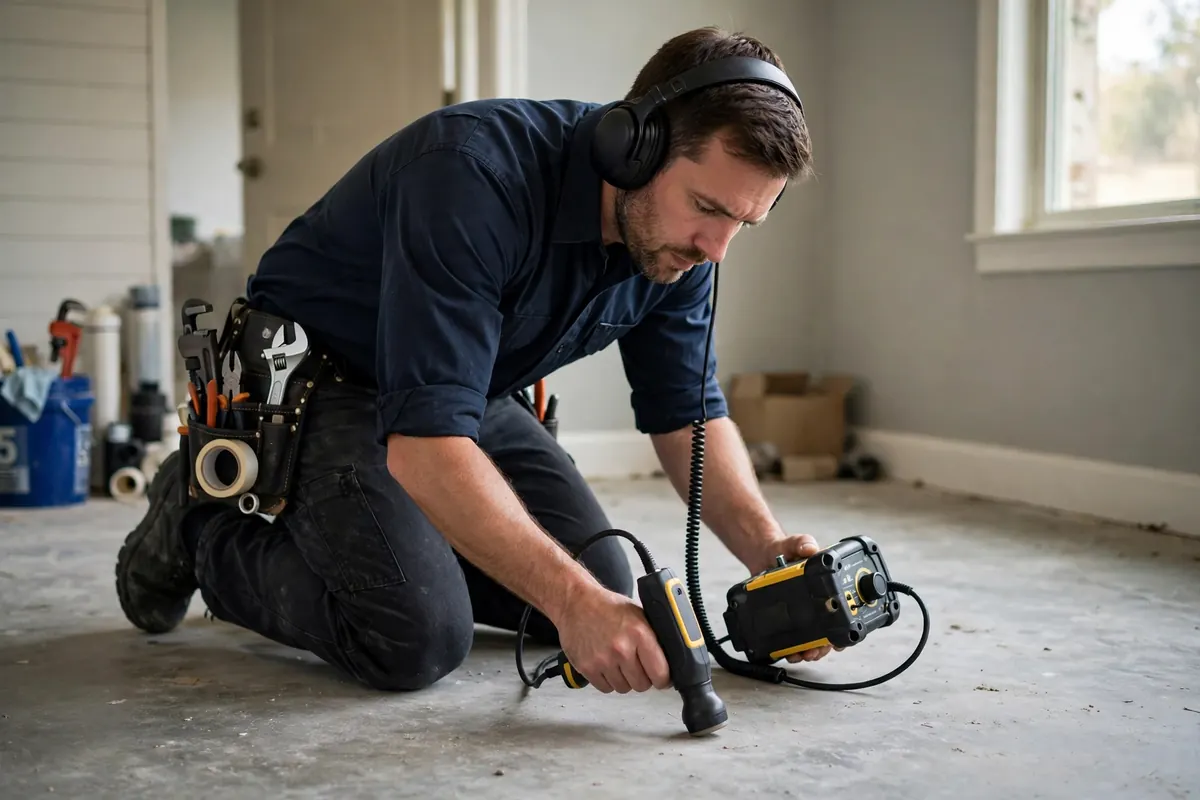
The water bill jumps and the meter turns slowly with every tap and appliance off. There is no damp patch, no warm floor and no sound of running water anywhere in the house.
What typically happens: listening checks find the leak on a cold line under the slab near the kitchen, and a direct repair through a small opening stops the meter.
Book this service →Hidden leaks rarely announce themselves clearly. If any of these sound familiar, the first step is a meter check with everything off.
Ask a pro →A warm patch on tile or wood often means a hot-water line is leaking under the slab. Thermal and listening checks narrow it down before anything is opened.
A meter that moves when nothing in the house is using water is the clearest sign of a hidden leak. We check it first, and check it again after the repair.
A sudden rise with no change in use usually means water is going somewhere unseen. The bill is a clue, not a diagnosis — detection finds the cause.
A patch on a wall, ceiling or floor that stays damp points to a line nearby. We trace the line rather than opening the wall at the stain.
Our Google profile shows a 4.9-star rating from 16 reviews. We publish no review text on this page — the full reviews are on our Google profile, where they were written.
The common signs are a warm spot on the floor, a water meter that turns with every tap off, the sound of running water when nothing is on, a damp patch that never dries, or a water bill that jumps without a change in use. One sign on its own is not proof — a meter check with everything off is the first step.
Listening equipment hears water escaping from a pressurised line, a thermal camera shows warm patches from a hot-water leak, and a camera shows the inside of a drain or sewer line. The aim is to open the smallest area the repair needs.
Three, broadly: repair the failed section through a small opening, reroute a new line around the slab, or re-pipe the home. Which fits depends on the pipe, how many times the line has failed, and how much of the slab would need to be opened. We explain the options before work starts.
No. Water travels along pipes and joists, so the wet spot is rarely where the pipe failed, and an opening in the wrong place only adds to the repair. Shut off the main if water is showing, and call us during open hours.
Check the meter with everything off. If it is turning, call Lake Travis Plumbing, Monday to Friday, 9 AM to 5 PM, on (254) 822-6941 and describe what you have noticed.
Call Now (254) 822-6941 →Call (254) 822-6941 for Leak Detection and Repair in Spicewood, Texas, Monday to Friday, 9 AM to 5 PM. Describe what you are seeing and we will explain the next step. If you would rather write it down first, use the form and we will call you back during open hours.