Camera inspection
A camera is run through the line from a cleanout, and the footage shows roots, scale, breaks, bellies and the pipe material. You see what we see.
A sewer line problem in Spicewood is usually roots, scale, or soil that has shifted under a rocky, limestone yard. Lake Travis Plumbing provides sewer line services in Spicewood, starting with a camera, so digging happens only where the pipe has actually failed. Call (254) 822-6941, Monday to Friday, 9 AM to 5 PM.
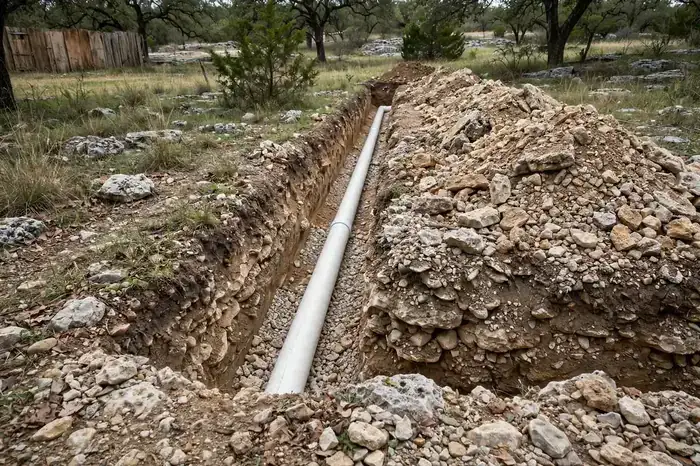
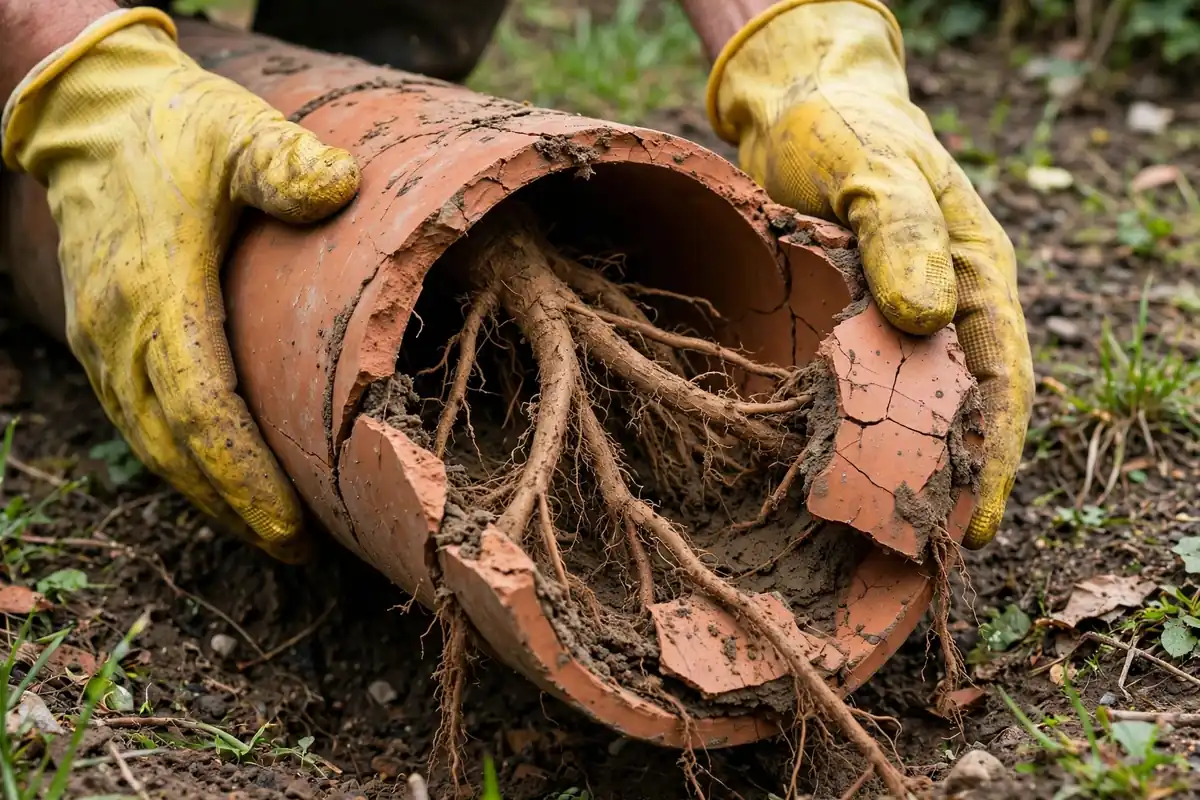
Sewer laterals here run through thin soil over limestone, under live oaks and cedars, and across ground that moves with wet and dry cycles. Roots find the joints in older clay and cast-iron lines. Hard water leaves scale that narrows the pipe. Shifting soil opens joints and creates low spots — bellies — where water sits. And where the ground is solid rock, trenching is slow, hard work, which is one more reason to camera the line before anyone digs.
The camera comes first because it shows what the repair has to be: a section replaced, a line relined where the ground allows, or a full replacement. It also shows what is not a sewer problem at all — on a septic home, the trouble may be in the tank or the drain field, and that is a septic provider's job. We do the line to the tank; the tank and field belong to the septic trade. For the camera story in more detail, see our post on why a drain keeps clogging after cleaning.
The work runs in order: find it, show it, then fix only what has failed.
A camera is run through the line from a cleanout, and the footage shows roots, scale, breaks, bellies and the pipe material. You see what we see.
The camera head is located from above ground, so the dig — if one is needed — starts at the right spot rather than at a guess.
Roots are cut out of the line and the pipe is jetted clean, so the camera can show whether the joints themselves have failed or only the roots were in the way.
Where one section has failed, that section is replaced. Where the line has failed in several places, a longer replacement is the honest answer.
Where the ground and the pipe allow, a trenchless repair avoids a long open trench. Where rock or a collapsed line rules it out, open trench is the way, and we say so before work starts.
Call (254) 822-6941, Monday to Friday, 9 AM to 5 PM. Tell us which fixtures back up, whether it is the lowest drain in the house, and whether the home is on septic or a grinder pump.
The blockage is cleared first so the camera can see the pipe. The footage is recorded, and we watch it with you.
Roots, scale, a break or a belly — the camera shows which, and the locator marks the spot from above ground.
Section repair, trenchless where the ground allows, or open trench. We explain which fits the pipe and the ground before any digging.
The repair is tested by running water through the line, then the trench is backfilled and the area left tidy.
Call (254) 822-6941, Monday to Friday, 9 AM to 5 PM. Tell us which fixtures back up, whether it is the lowest drain in the house, and whether the home is on septic or a grinder pump.
Shows the inside of the line — roots, scale, breaks, bellies — and records the footage so the repair is based on what is seen.
Finds the camera head from above ground, so a dig starts at the failed section, not at a guess.
Clears grease, scale and roots from the line so the camera can see the pipe itself.
Cuts roots out of a lateral before jetting and camera work.
Opens the trench where a section has to be replaced, in ground that is often rocky limestone.
Replacement sections in pipe suited to the ground and the line, jointed and tested before backfill.
These are illustrative examples of the kinds of jobs this service covers, not records of specific completed jobs.
A home under mature oaks backs up every few months. The line is old clay tile, and roots have come in through every joint along the front yard.
What typically happens: the roots are cut out, the failed sections are replaced, and the camera shows a clean line from the house to the street.
Book this service →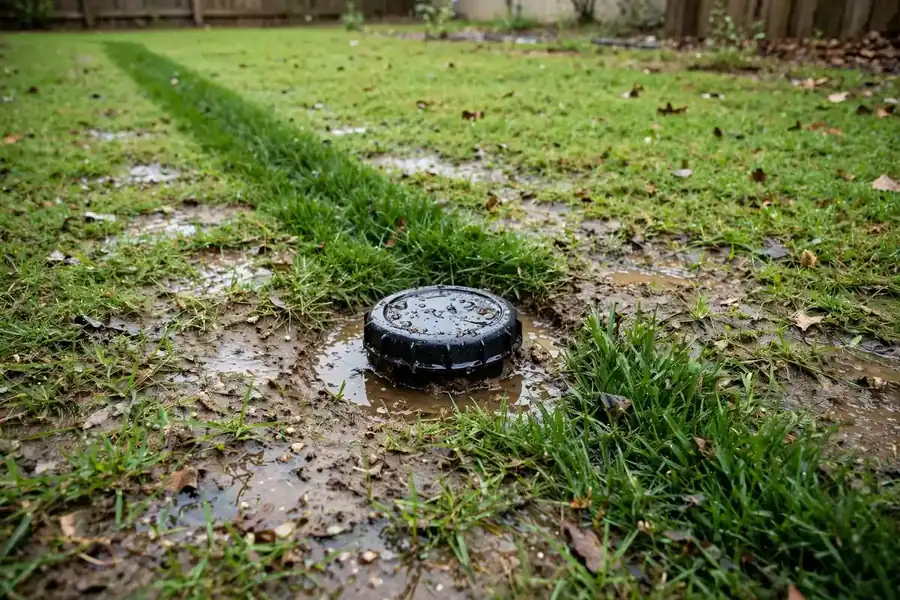
A wet patch in the yard that never dries, with a faint smell after rain, points to a low spot in the lateral where water sits instead of flowing away.
What typically happens: the camera finds the belly, the section is dug up and re-laid to grade, and the yard is backfilled and left tidy.
Book this service →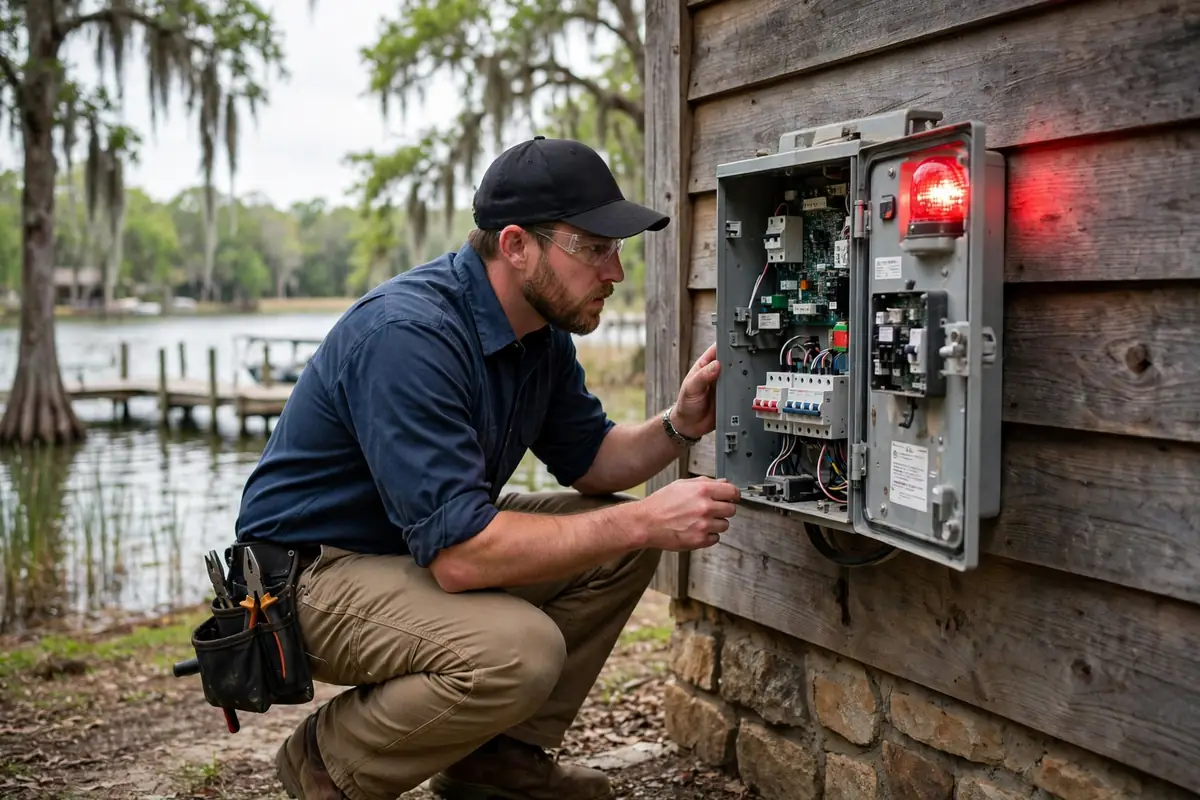
A hillside home's lowest drain backs up after heavy rain, even though the fixtures inside run clear the rest of the week. The trouble is in the lateral, where a low section holds water after a storm.
What typically happens: the line is camera-checked to find the low section, the failed length is repaired or replaced, and the run is checked again to confirm it drains freely.
Book this service →A sewer backup is one of the more unpleasant calls we take. If the lowest drain in the house is backing up, stop using water and call during open hours.
Ask a pro →We clear the blockage, run a camera through the line, and repair or replace the failed section. If roots are the cause, we show you the footage.
Live oaks and cedars find the joints in older lines. Roots are cut out, the line is jetted, and the camera shows whether the pipe itself has failed.
If the alarm light is on, stop using water and call. The pump is checked, the blockage cleared, and the alarm explained so you know what it means next time.
A smell near a cleanout or a wet patch that never dries can mean a break or a belly in the lateral. The camera finds it before anyone digs.
Our Google profile shows a 4.9-star rating from 16 reviews. We publish no review text on this page — the full reviews are on our Google profile, where they were written.
Because the camera shows what has actually failed — roots, scale, a break or a belly — and where. Digging without it means guessing at the spot, and in rocky limestone ground a wrong guess is expensive in time and effort.
It depends on the pipe and the ground. Trenchless repair suits some lines where the pipe can take it and the ground allows. A collapsed line or solid rock can rule it out, and then open trench is the way. The camera footage decides, and we explain the choice before work starts.
We do the house lines and the line running out to the tank, including camera work and line repair. The tank, the drain field and pumping belong to a septic provider, and we tell you who to call for those.
It means the pump is not keeping up — usually a blockage or a pump fault. Stop using water and call us. Keep using water and the tank can back up into the house.
Stop using water if the lowest drain is backing up, and call Lake Travis Plumbing, Monday to Friday, 9 AM to 5 PM, on (254) 822-6941.
Call Now (254) 822-6941 →Call (254) 822-6941 for Sewer Line Services in Spicewood, Texas, Monday to Friday, 9 AM to 5 PM. Describe what you are seeing and we will explain the next step. If you would rather write it down first, use the form and we will call you back during open hours.